
December 23, 2025
Behind the Scenes of Real-Time Fog Detection: How AI Instantly Analyzes 3,500 Cameras Nationwide



Fog is essential information for ensuring transportation safety. On roads, it causes rear-end collisions and traffic congestion, while at airports it significantly impacts the operation of aircraft and helicopters. However, currently only about 90 AMeDAS observation sites across Japan can automatically detect fog.
Weathernews took on the challenge of developing a system to detect fog using AI and approximately 3,500 live cameras positioned nationwide.
If we could accurately identify fog occurrence every 10 minutes, how many lives and how much economic activity could we protect? In this blog, we spoke with Taisei Takahashi, who was in charge of developing this system, about the background of the development and how it can be utilized.
Leveraging AI and Proprietary Infrastructure to Enable Real-Time Fog Detection
The need to understand fog conditions had long been apparent across various industries, including road management operators, airlines, television broadcasters, and shipping companies. At Weathernews, individual teams had been responding to these "fog-related needs" separately—for example, the Aviation Weather Division developed a system that used machine learning to detect fog from live camera footage. However, with conventional machine learning, a separate model had to be applied to each individual camera, making it unrealistic to deploy this technology across a vast number of live cameras.
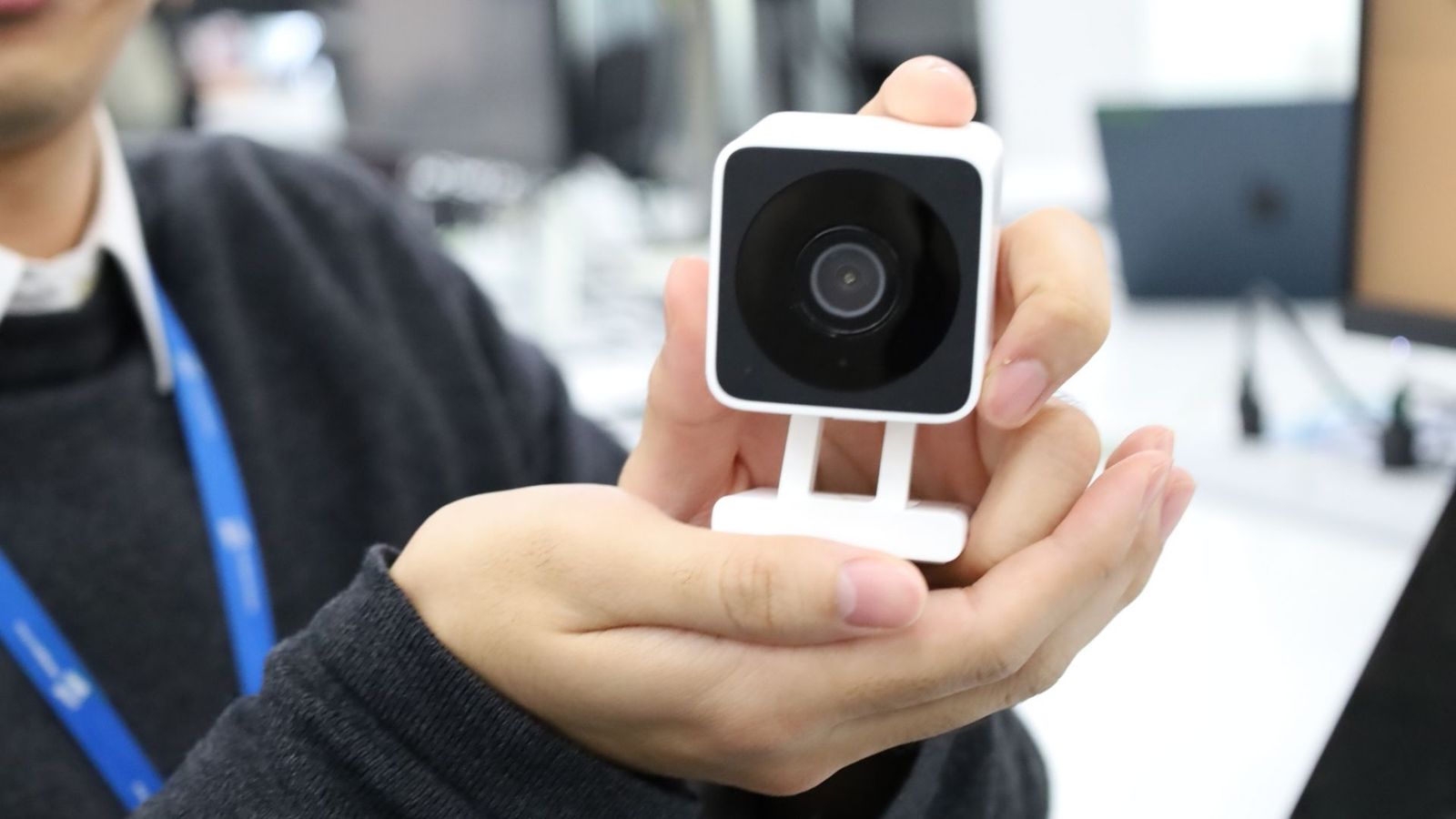
Meanwhile, Weathernews had been expanding its live camera network, including launching integration between Soracom's cloud-based camera service "Sorakame"1 and the Weathernews service starting in 2024. As a result, the number of connected cameras surpassed 2,500. Within the Weathernews Forecast Center, there was a strong desire to make better use of this infrastructure.
With the remarkable advances in AI technology in recent years, we began to believe that the concept of "detecting fog using live cameras" could finally be realized. This led us to take on the challenge of fog detection using approximately 3,500 live cameras owned by Weathernews.
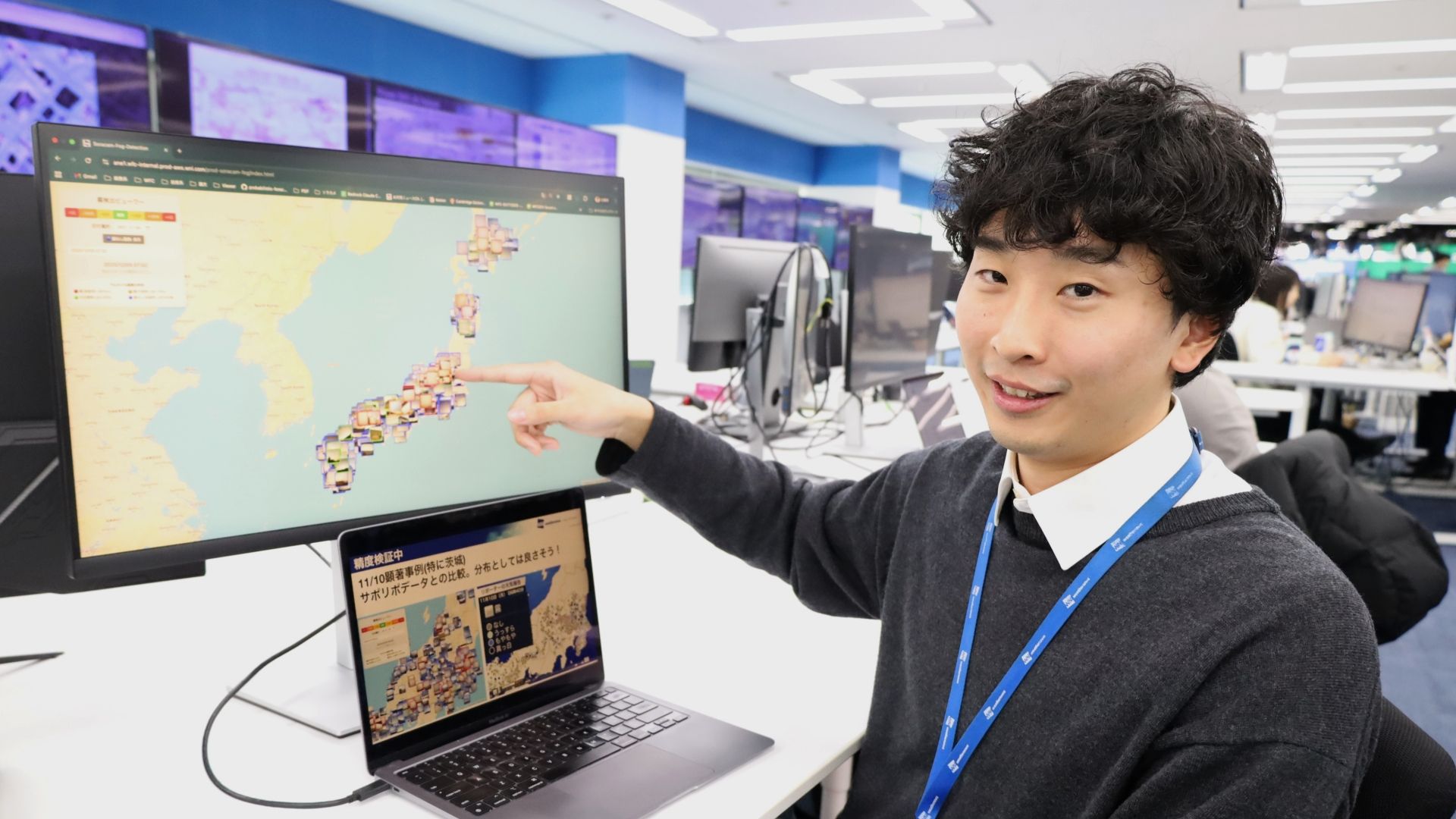
Automatically Detecting Fog from 3,500 Live Cameras Nationwide
Improving Cost Efficiency and Accuracy by Leveraging Diverse Weather Data
During development, we faced significant challenges balancing AI usage costs with detection accuracy. Before launching full-scale operations, we tested and evaluated multiple AI models. For example, one model demonstrated exceptionally high accuracy in fog detection, but with estimated daily costs reaching several hundred thousand yen, practical operation was simply not feasible.
The AI model we ultimately selected offered dramatically lower costs compared to alternatives, while still achieving accuracy suitable for real-world deployment. However, cost wasn't the only factor in our decision. A key advantage of this model was its ability to improve accuracy through specific instructions, or prompts—a capability that proved decisive in our selection.
Even after choosing the AI model, we continued refining the system to maximize operational efficiency. One critical optimization was pre-filtering live cameras before AI analysis, excluding those in areas where fog conditions were unlikely. To identify relevant cameras, we leveraged weather reports submitted by app users alongside observational data including humidity, wind speed, and precipitation. This approach allowed us to optimize costs while simultaneously improving detection accuracy.
The system analyzes images from approximately 3,500 cameras every 10 minutes—processing roughly 500,000 images daily. Because we were committed to real-time fog detection, this high update frequency was essential. By leveraging cloud technology, we achieved the ability to analyze this massive volume of camera images simultaneously.
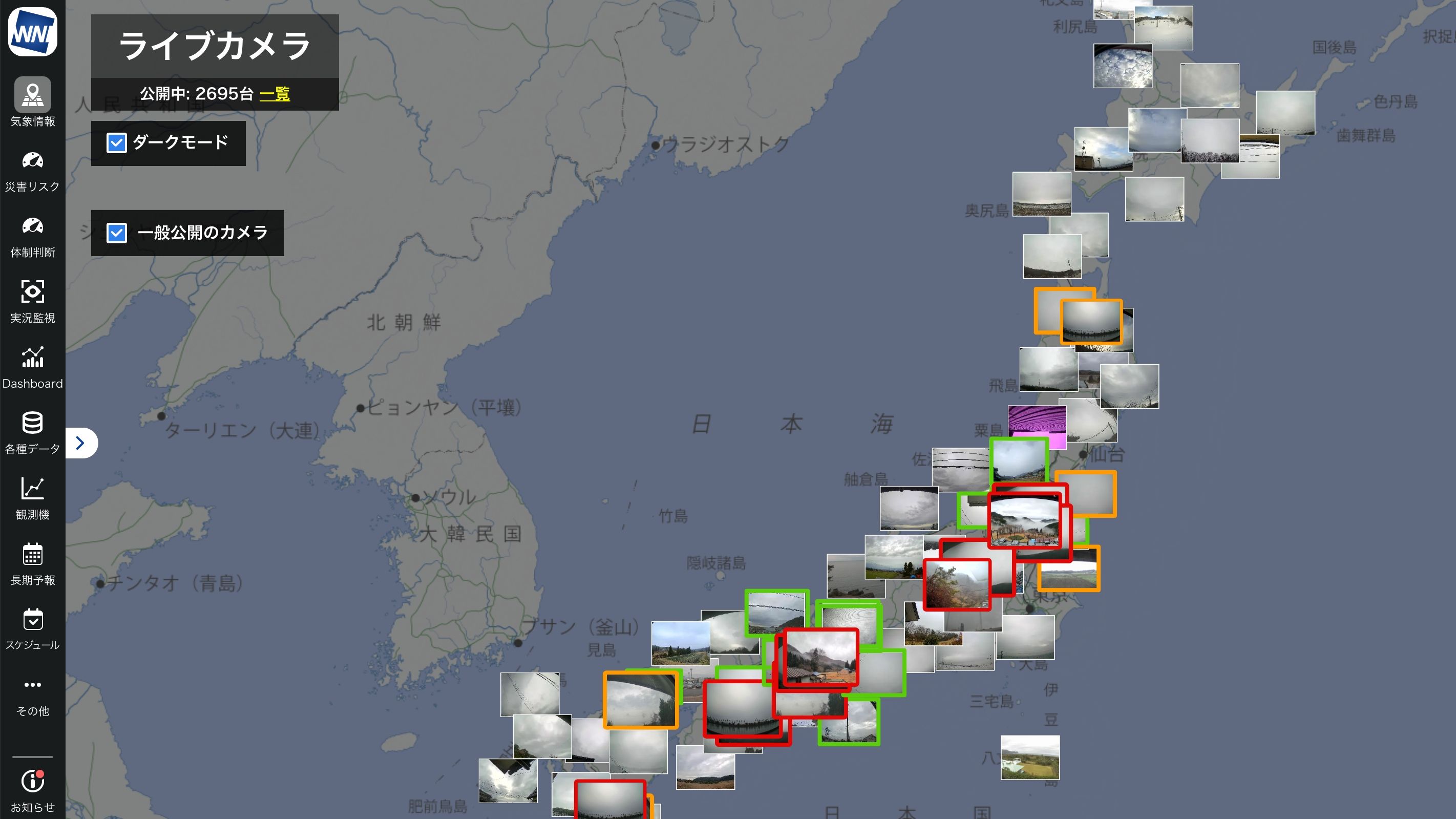
The fog detection technology was completed in November 2025. We also released an internal web-based system, making detection results accessible to anyone within the company. When fog is detected, the camera image frame on the map is highlighted in red or orange, providing instant visual alerts.
The response from staff has been overwhelmingly positive, with many expressing enthusiasm about incorporating the system into their daily work to better support customers.
Enhancing Support for Expressway Operators with High-Resolution 1 km Mesh Coverage Nationwide
The development of this fog detection technology represents a major breakthrough in meteorological observation.
Previously, the limited number of observation sites made it difficult to generate nationwide "real-time fog analysis data." By combining this technology with the expertise of Weathernews forecasters, we can now produce analysis data at a high resolution of 1 km mesh across all of Japan, which is expected to significantly improve forecast accuracy. Furthermore, once this analysis data is established, objective accuracy evaluations become possible, helping us clearly identify areas for improvement in predictive performance.
This technology has already entered trial operations within the Land Weather Division and is being used to support expressway management companies. However, we don't intend to limit its application internally. Moving forward, we aim to build systems that allow companies to directly view analysis results and receive immediate alerts when fog risks increase, helping reduce fog-related accidents and protect lives.
Moreover, this technology is highly versatile and can be applied to virtually any live camera. Leveraging this adaptability, we believe the day is not far off when fog detection will be possible not only across Japan, but globally—using live cameras around the world.
Footnotes
- 1:*“ソラカメ“(Sorakame)is a trademark or registered trademark of SORACOM, INC. ↩︎
Share

March 27, 2026
Ogasawara Islands to Achieve Japan's Highest Weather Observation Density Through Digital Innovation

March 16, 2026
Japan's Most Comprehensive Cherry Blossom Forecast: How Our Proprietary Bloom Prediction Model Leverages User-Generated Photos and High-Precision Data Across 1,400 Locations
March 13, 2026
How TV Stations Are Transforming Weather Coverage A New Content Solution Helping Broadcasters Navigate Weather and Disaster Reporting