
December 25, 2025
Snow Removal Decisions Beyond Gut Instincts: How AI Is Redefining Snow Accumulation Forecasting



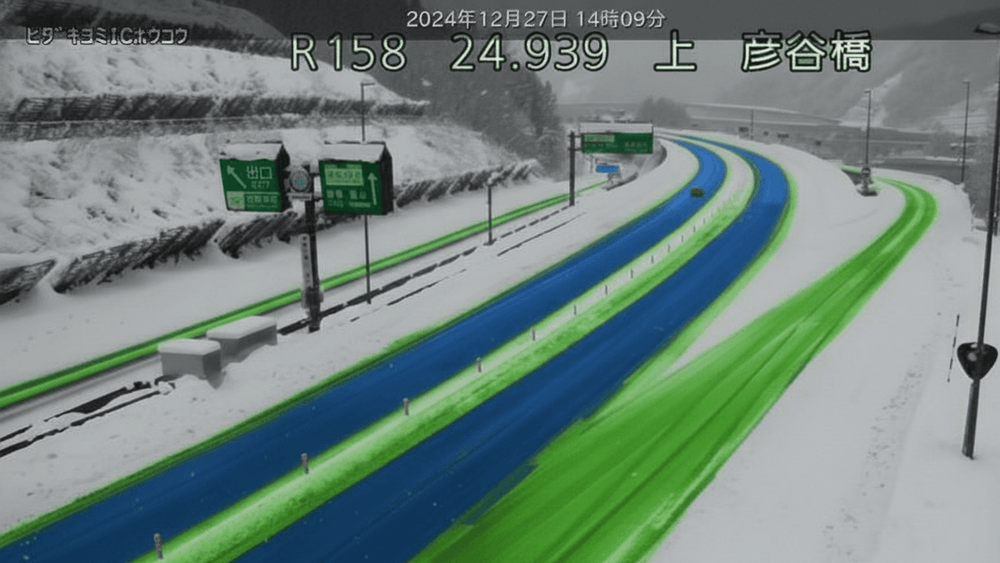
Winter snowfall can have serious consequences for daily life and business operations. This is particularly true in urban areas unaccustomed to snow, where even minimal accumulation on asphalt surfaces can lead to slip accidents and significant disruptions to commuting and logistics networks.
To prevent these situations, road maintenance and management require accurate forecasts that answer three critical questions: when, where, and how much snow will accumulate on road surfaces. However, snow forecasting remains extremely challenging, and we have long recognized the difficulties in effectively supporting road management operations.
In this blog, we spoke with Kosuke Aoki, a developer at the Weathernews Forecast Center, about newly developed snow forecasting technology that leverages AI and machine learning.
Pushing the Limits of Forecasting Technology: A Challenge That Started with Uncertainty
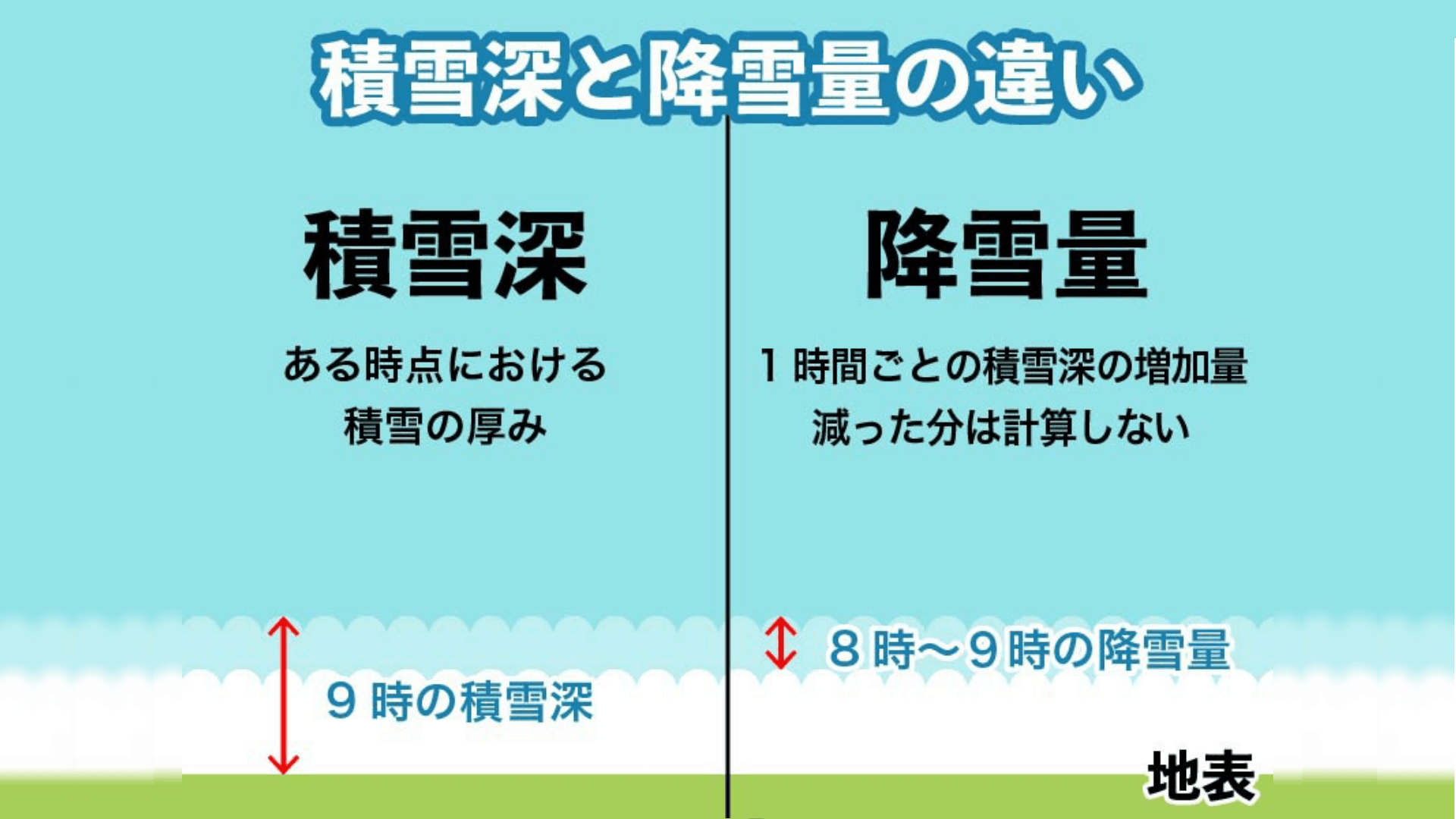
While we speak of "snow forecasting" as a single concept, this initiative actually tackles two distinct challenges. The first is improving the accuracy of snowfall intensity predictions—specifically, the rate of snow accumulation per hour.
The second is predicting the precise moment when snow begins to accumulate on asphalt surfaces—that critical transition from 0 to 1 cm—which has significant social impact.
Traditional forecasting methods estimate "the amount of snow falling from the sky" based on precipitation and air temperature, then derive expected accumulation from those figures. However, simply adding up snowfall totals does not accurately reflect actual accumulation on the ground. Snow accumulates differently depending on its moisture content and weight, and as it piles up, it compresses under its own weight. With so many factors interacting in complex ways, constructing reliable prediction logic has been extremely difficult.
Against this backdrop, Weathernews had recently adopted a company-wide initiative to leverage AI and machine learning. At the Forecast Center, practical expertise in applying AI to weather forecasting was steadily accumulating during this period. To be honest, I had my doubts about whether machine learning could truly solve this problem. At the same time, however, I thought, "Perhaps with machine learning, the complexity of all these factors won't be such an obstacle after all," and "Even a small improvement in accuracy could deliver meaningful benefits to society." With those expectations in mind, I decided to take on this challenge.
The newly developed snowfall accumulation model estimates accumulation based on current meteorological conditions by training machine learning algorithms on historical weather data and observed snowfall records. The input variables encompass a comprehensive range of factors including air temperature, precipitation intensity, humidity, wind speed, existing snow depth, road surface temperature, and upper-air atmospheric conditions.
When evaluated using data from AMeDAS observation sites nationwide, this new model demonstrated higher accuracy than conventional methods, with highly favorable results overall. While accuracy varied across certain regions, further analysis revealed a strong correlation with precipitation forecast accuracy. This finding indicated that improvements in precipitation forecasting would likely yield corresponding improvements in snowfall accumulation predictions.
This new snowfall accumulation model has been operational for approximately one year and is currently available to users through the Weathernews app, as well as integrated into snow depth forecasts offered through Weathernews for business.

Unmatched Forecasting Technology: Accurately Predicting Snow Accumulation on Asphalt
While the snowfall accumulation model produced strong results, we weren't ready to stop there. We moved on to an even more challenging objective: predicting the precise moment when snow begins to accumulate on asphalt surfaces (0 → 1 cm). The primary challenge at this stage was a severe shortage of observation data related to road surface snow accumulation. AMeDAS observation sites are sparse in urban areas, and furthermore, AMeDAS snow depth measurements are taken over grass or metal plates—environments that differ substantially from actual road conditions. Asphalt surfaces typically maintain higher temperatures, causing snow accumulation to begin later than on grass or metal surfaces.
Given this data scarcity, simply deploying additional AMeDAS-style snow depth sensors was impractical from both cost and timeline perspectives. Instead, we turned to an innovative solution: AI-powered image analysis leveraging data from more than 100 roadside cameras.
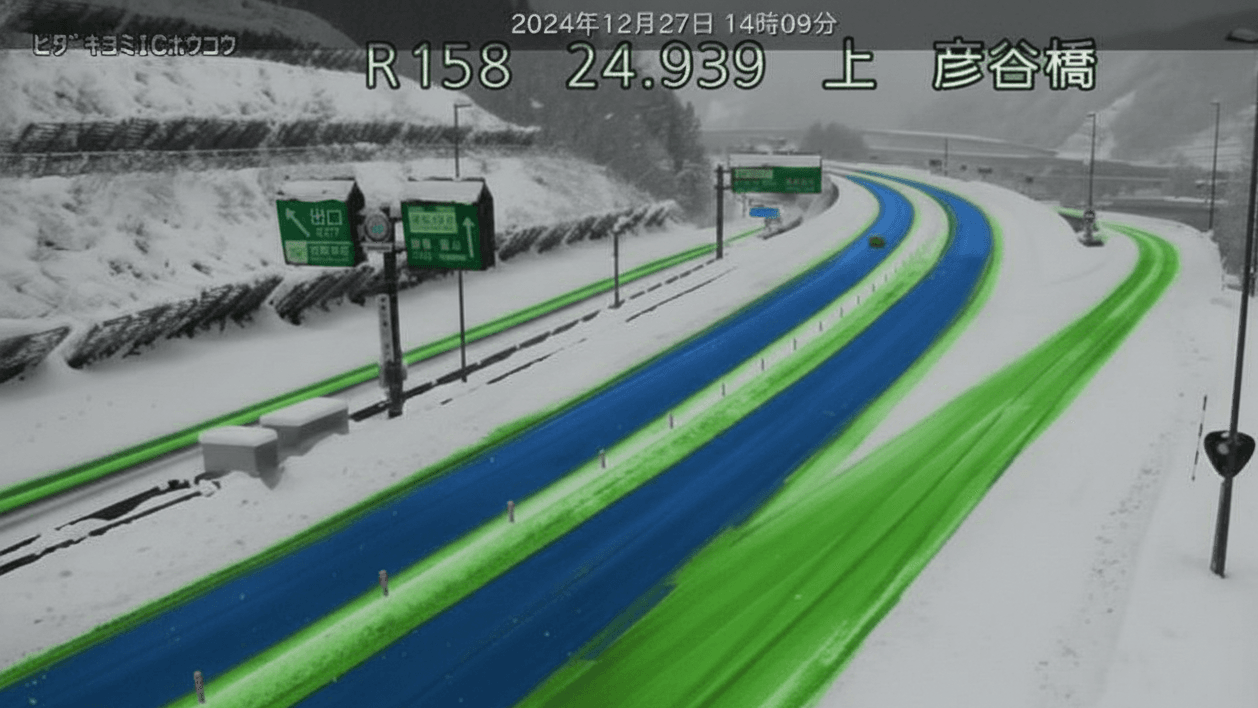
By generating observation data without relying solely on AMeDAS, we were able to develop another new prediction logic: “Snowfall Accumulation – Asphalt Version.” Like the snowfall logic described earlier, this model uses machine learning, but it incorporates many road-specific meteorological factors to achieve forecasts that better reflect real-world conditions.
Until now, forecasts primarily focused on snow accumulating on grass surfaces, such as those used for AMeDAS observations. With this development, we have, for the first time, established a technology capable of forecasting snow accumulation on roads, which is what society actually needs. Accuracy verification has already begun, and even in past cases with significant social impact, the new forecasts have shown results that more closely match real conditions than conventional methods. The “Snowfall Accumulation – Asphalt Version” forecast has been available since this year as “Road Surface Snow Accumulation Risk” in Weathernews for business. We have also received interest from private companies expressing a desire to collaborate by using their own live camera data to further improve accuracy.By combining Weathernews' forecasting technology with on-site operational data from businesses, we're establishing a positive feedback loop that continuously enhances value for users.
Building a Safer Society for Drivers Through Advanced Technology and High-Precision Forecasts
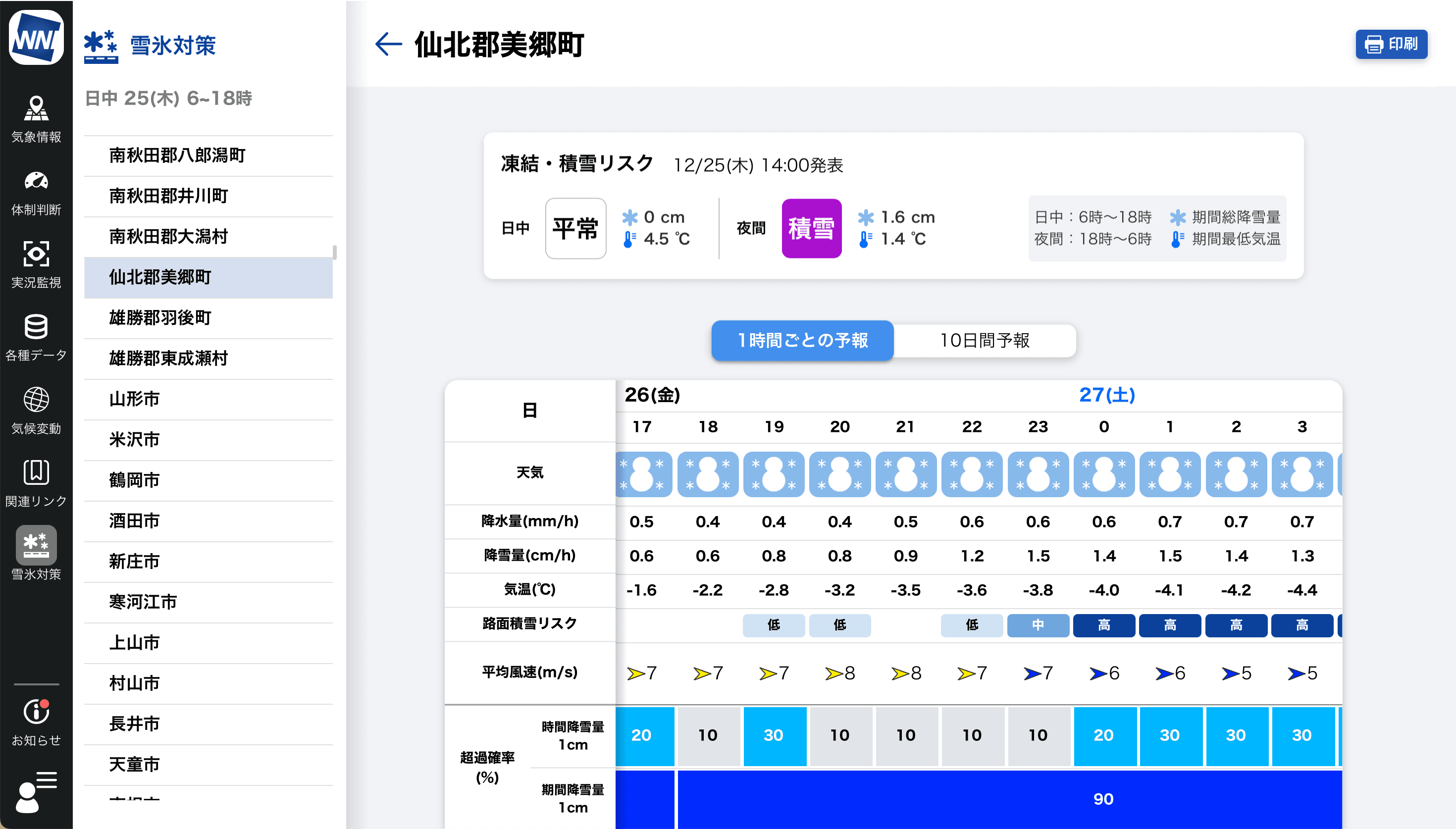
Weathernews for business,1 our corporate weather information service, provides pinpoint weather forecasts up to 10 days in advance. The Road Impact Forecast feature enables users to assess weather-related risks up to 72 hours ahead on a 1-kilometer grid basis.
The service also displays Road Surface Snow Accumulation Risk in three levels—low, medium, and high—at hourly intervals up to three days ahead, helping users determine optimal timing for snow removal operations.
Road management operators can monitor the onset of snow accumulation using the Road Surface Snow Accumulation Risk, and by making comprehensive judgments that incorporate other weather information as well, they can establish an optimal snow removal operation.
With conventional physics-based models, accuracy verification required considerable time, often resulting in lengthy delays before forecasts could be deployed in operational settings. Through this initiative, however, we've discovered that machine learning and AI significantly lower the barriers to developing new forecasting models and dramatically accelerate the path to practical implementation.
At the same time, this experience reinforced an important truth: while machine learning is a powerful tool, its effectiveness ultimately depends on high-quality, accurate foundational data.
Weathernews remains committed to developing high-resolution, high-accuracy weather forecasting technologies and advancing solutions that directly address real-world challenges—contributing to a safer, more resilient society.

Footnotes
Share

March 27, 2026
Ogasawara Islands to Achieve Japan's Highest Weather Observation Density Through Digital Innovation

March 16, 2026
Japan's Most Comprehensive Cherry Blossom Forecast: How Our Proprietary Bloom Prediction Model Leverages User-Generated Photos and High-Precision Data Across 1,400 Locations

March 13, 2026
How TV Stations Are Transforming Weather Coverage A New Content Solution Helping Broadcasters Navigate Weather and Disaster Reporting