
April 10, 2026
Heatstroke Prevention Case Studies: Leveraging SoratenaPro in Construction and Schools



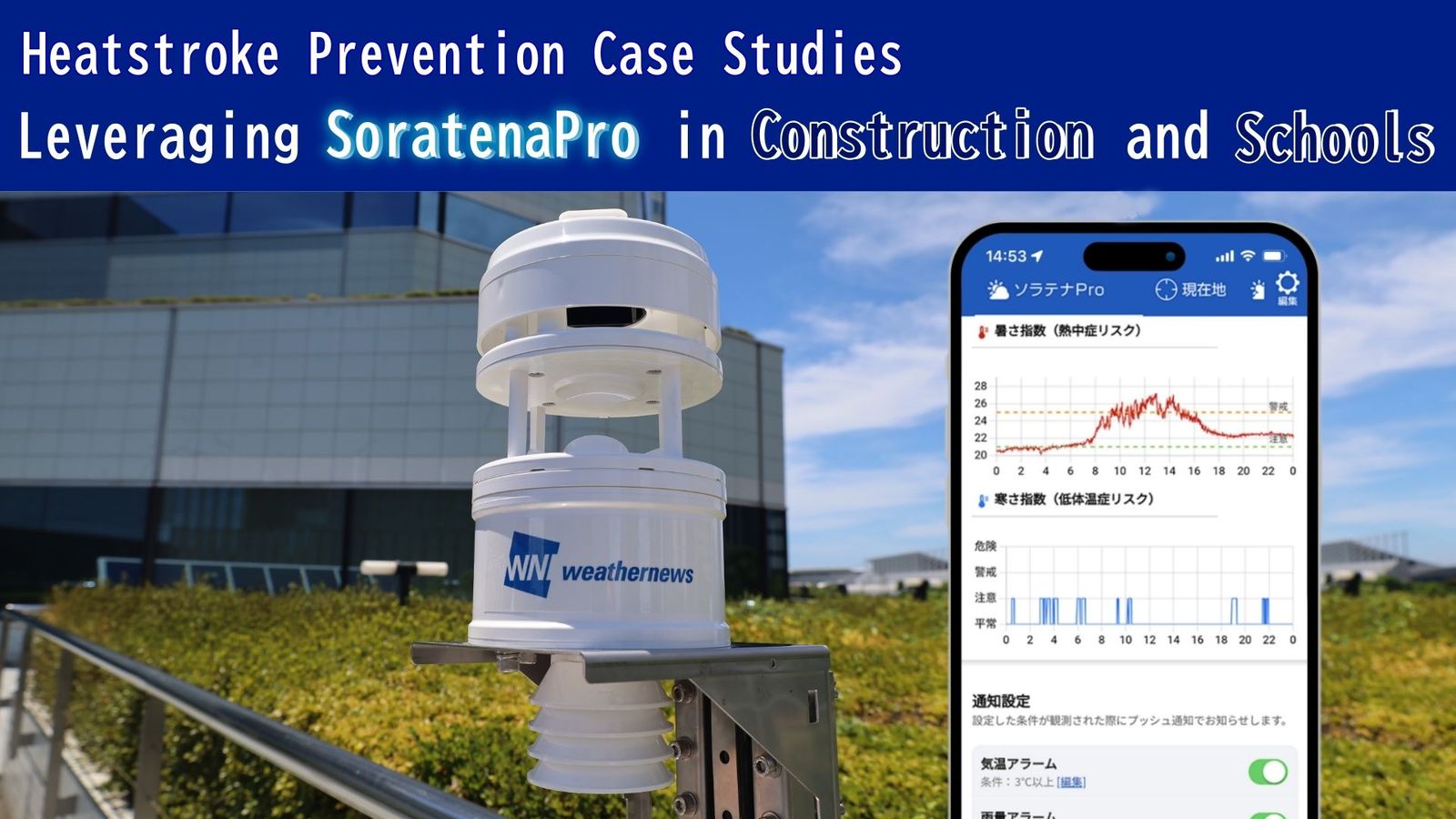
In early April, temperatures across Japan have already begun to approach "summer days" with highs of 77°F (25°C), bringing unseasonably warm and humid conditions. As daily temperature fluctuations become more extreme, the body often struggles to regulate its internal temperature, significantly increasing the risk of heatstroke.
While heatstroke is typically associated with midsummer, emergency ambulance transports often begin as early as May and through the rainy season, when people have not yet fully acclimated to the heat. Furthermore, following the revision of the Industrial Safety and Health Regulations enforced in June 2025, heatstroke countermeasures are now a mandatory obligation for employers.
To protect workers in outdoor environments, both predictive forecasting and real-time responses to temperature and humidity are essential. In this article, we explore how companies are leveraging high-precision weather data as a cornerstone of their heatstroke prevention strategies.
“SoratenaPro”: Real-Time, Pinpoint WBGT Calculations Updated Every Minute
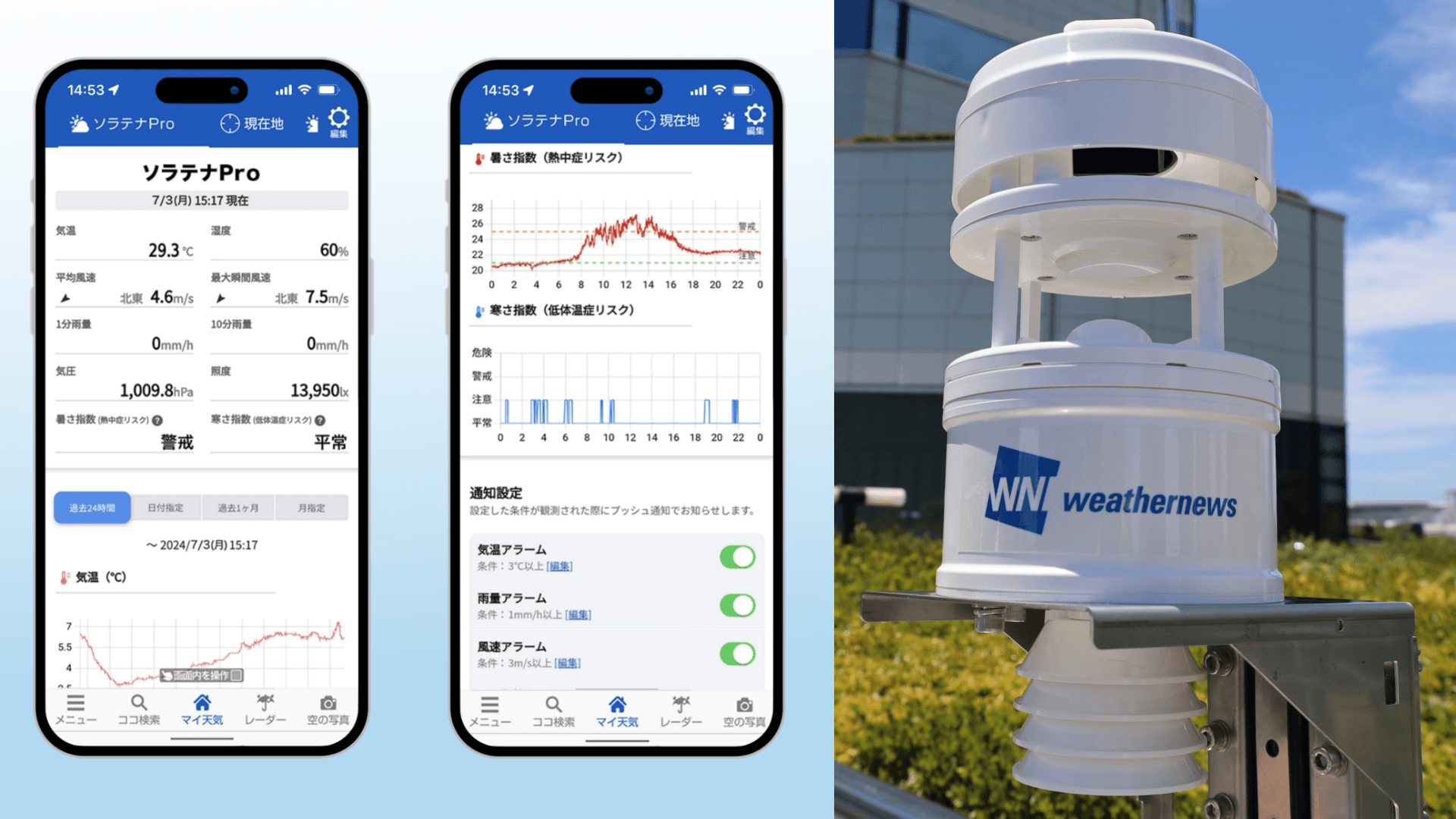
Heatstroke occurs when the body’s ability to regulate temperature fails due to an imbalance of water and salt in high-heat, high-humidity environments. A critical metric for prevention is the WBGT (Wet Bulb Globe Temperature). Unlike standard air temperature, WBGT factors in humidity and solar radiation to reflect the actual heat stress on the human body.
Japan’s Ministry of the Environment and the Japan Meteorological Agency issue "Heatstroke Alerts" when the forecast WBGT for the following day is expected to exceed 91.4°F (33°C). However, these alerts cover broad prefectural areas. In environments where safety is paramount—such as construction sites and schools—relying solely on these broad alerts can be problematic. Consider Tokyo in August 2025: alerts were issued nearly every other day. If outdoor work and physical education classes were suspended with each alert, operations and learning would essentially come to a standstill.
With SoratenaPro, Weathernews enables on-site WBGT calculations at one-minute intervals, providing precise, actionable data tailored to specific locations.
CASE STUDY 1: Construction & Facility Management
High-Performance IoT Sensors for Precise On-Site Safety
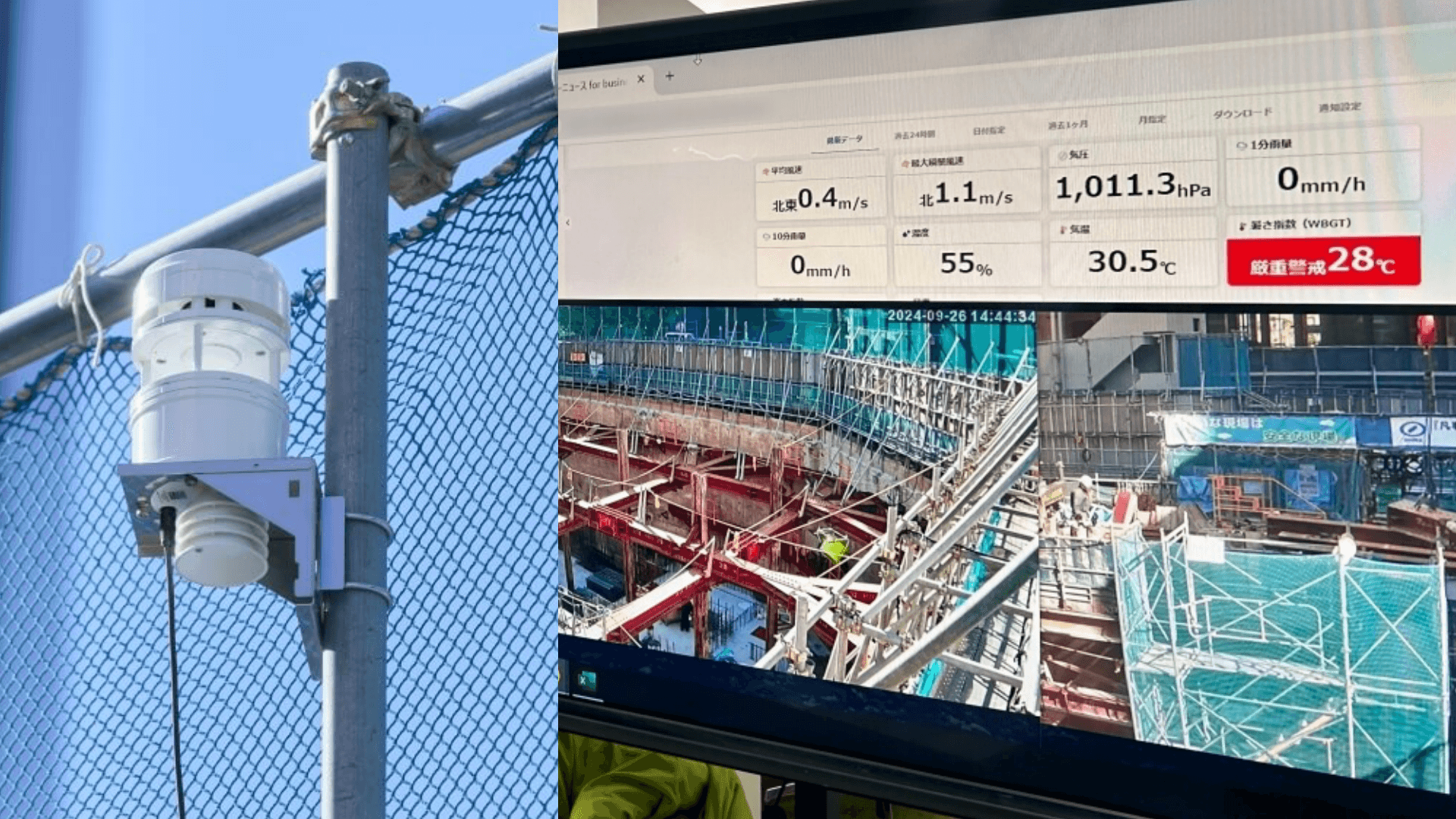
Construction and civil engineering sites face a constant challenge: maintaining worker safety while meeting tight project deadlines. Success requires making quick, data-driven decisions. Shimizu Corporation has implemented a solution where site conditions at remote locations are monitored in real time and displayed on large screens at their central office.
Using data from SoratenaPro, managers can make objective, immediate decisions—such as mandating hydration breaks with sports drinks when WBGT levels rise, or halting crane operations when wind speeds reach unsafe levels.
Daiwa House Industry has taken a different approach, deploying SoratenaPro across 14 residential communities situated in wooded or hilly terrain, where many elderly residents call home. As summer temperatures grow increasingly extreme, the system continuously monitors WBGT levels and automatically alerts management staff when dangerous thresholds are exceeded—prompting immediate safety checks and resident notifications.
CASE 2: Elementary and Junior High Schools
Reducing Teacher Workload Through Remote Environmental Monitoring
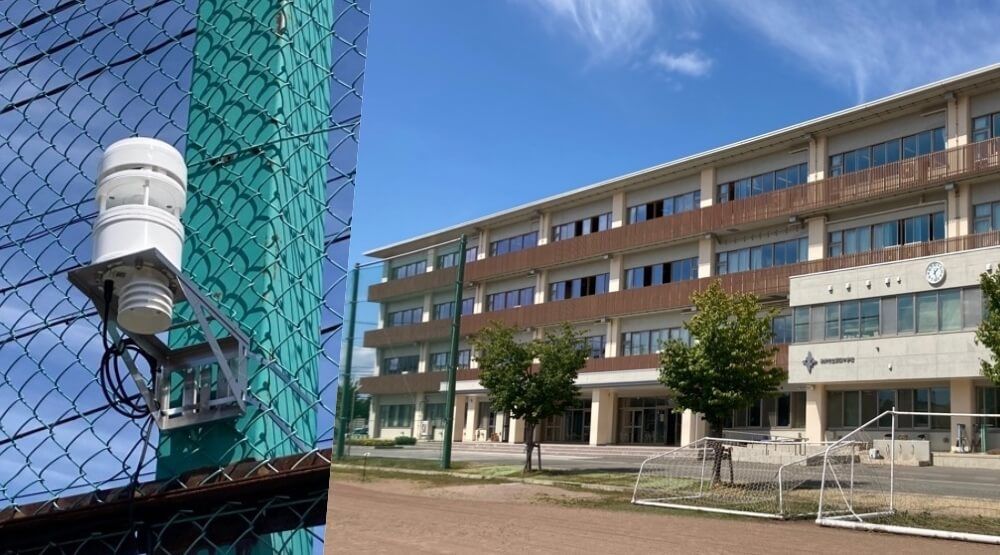
Schools nationwide face a pressing challenge: protecting student safety while managing teacher workload efficiently. Cities like Kaminoyama and Yonezawa in Yamagata Prefecture are pioneering innovative solutions for heatstroke prevention with SoratenaPro.
In the past, teachers had to manually measure WBGT using handheld devices—stepping outside into extreme heat every hour in addition to their already demanding schedules. This created both a physical burden and an administrative strain. SoratenaPro has fundamentally changed this workflow.
Now, detailed environmental data—including temperature, humidity, and WBGT updated every minute—is instantly accessible on monitors in teachers' lounges or on personal smartphones. When WBGT reaches dangerous levels, automated alerts are pushed directly to staff devices. This digital solution eliminates the need for manual outdoor measurements while providing more accurate, continuous monitoring of school grounds.
The response from educators has been overwhelmingly positive:
• “It eliminates human error, making it much more reliable than handheld devices.” • “Having quantified, professional-grade data gives us the confidence to make safety calls.” • “Because the data is so accessible, we find ourselves checking the conditions more frequently.” • “We can make informed decisions without leaving the office, allowing us to manage our time more effectively.”
Warmer-than-Average Temperatures Forecast Across Japan (April–June)
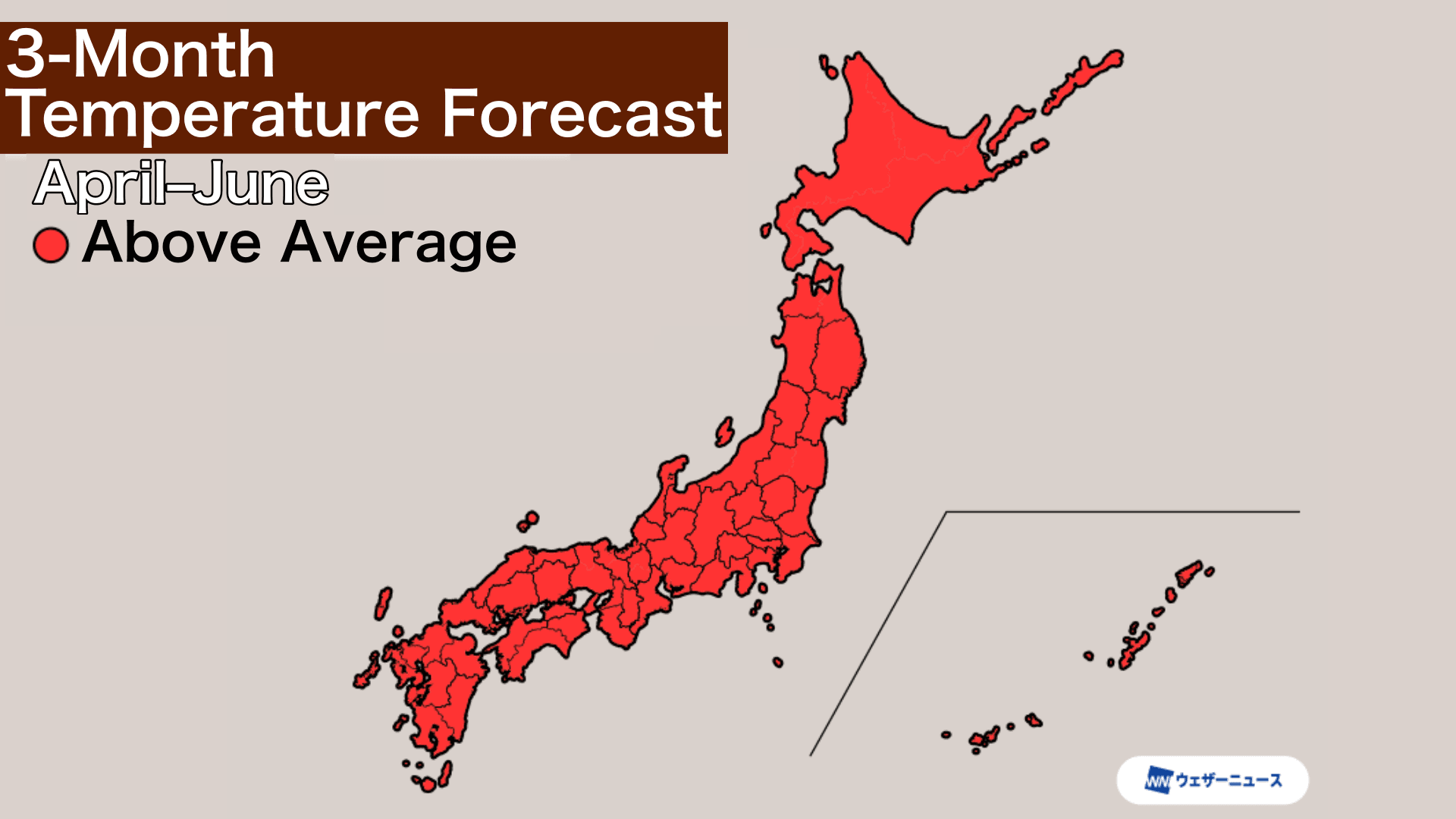
Looking ahead, SoratenaPro is scheduled for an update that will leverage data from SoratenaPro devices to deliver pinpoint forecasting capabilities. Weathernews provides high-resolution, high-accuracy weather information to support better decision-making for organizations facing heatstroke prevention challenges.
On March 24, the Japan Meteorological Agency released its three-month forecast covering April through June. The Japanese archipelago is expected to be frequently covered by warm air, with temperatures predicted to be higher than average nationwide. Please take early measures against the heat and remain vigilant about heatstroke risks.
For more information about SoratenaPro, please visit here.
Share
October 16, 2026
Chiba Torrential Rain Disaster: How Weathernews Protected Employees and Maintained Business Continuity
September 15, 2026
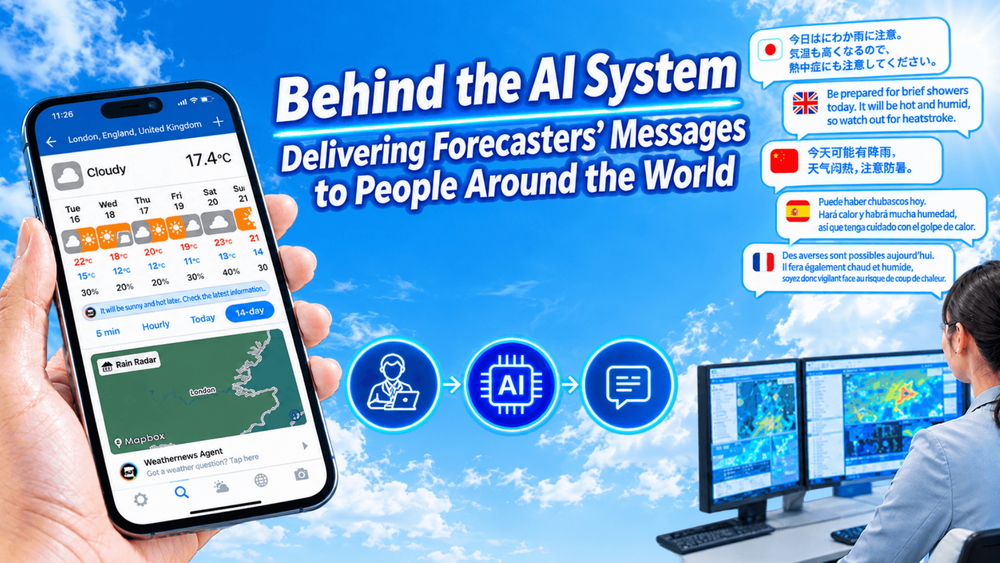
Behind the AI System Delivering Forecasters’ Messages to People Around the World in Just Three Lines
![[2026 Kumamoto Earthquake] How Weathernews LiVE Protects Lives Through User Reports and Expert Analysis](https://gvs.weathernews.jp/wni_blog_media/large_20260914_top_3958fce7fc.png)
September 14, 2026
[2026 Kumamoto Earthquake] How Weathernews LiVE Protects Lives Through User Reports and Expert Analysis