Our Policy
The weather services market, which began at sea with a passionate desire to protect the lives of sailors, has since expanded to the air and land. Today, we are working to realize a sustainable society by minimizing risks through weather and climate services for both the BtoB (corporate) and BtoS (individual) markets, and by pursuing initiatives to reduce our environmental impact.
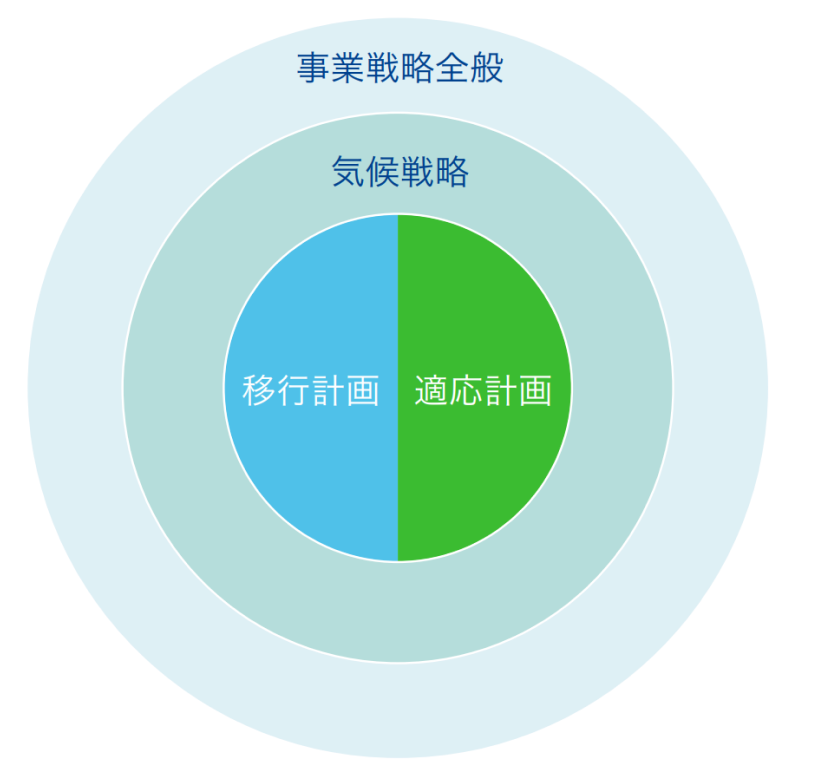
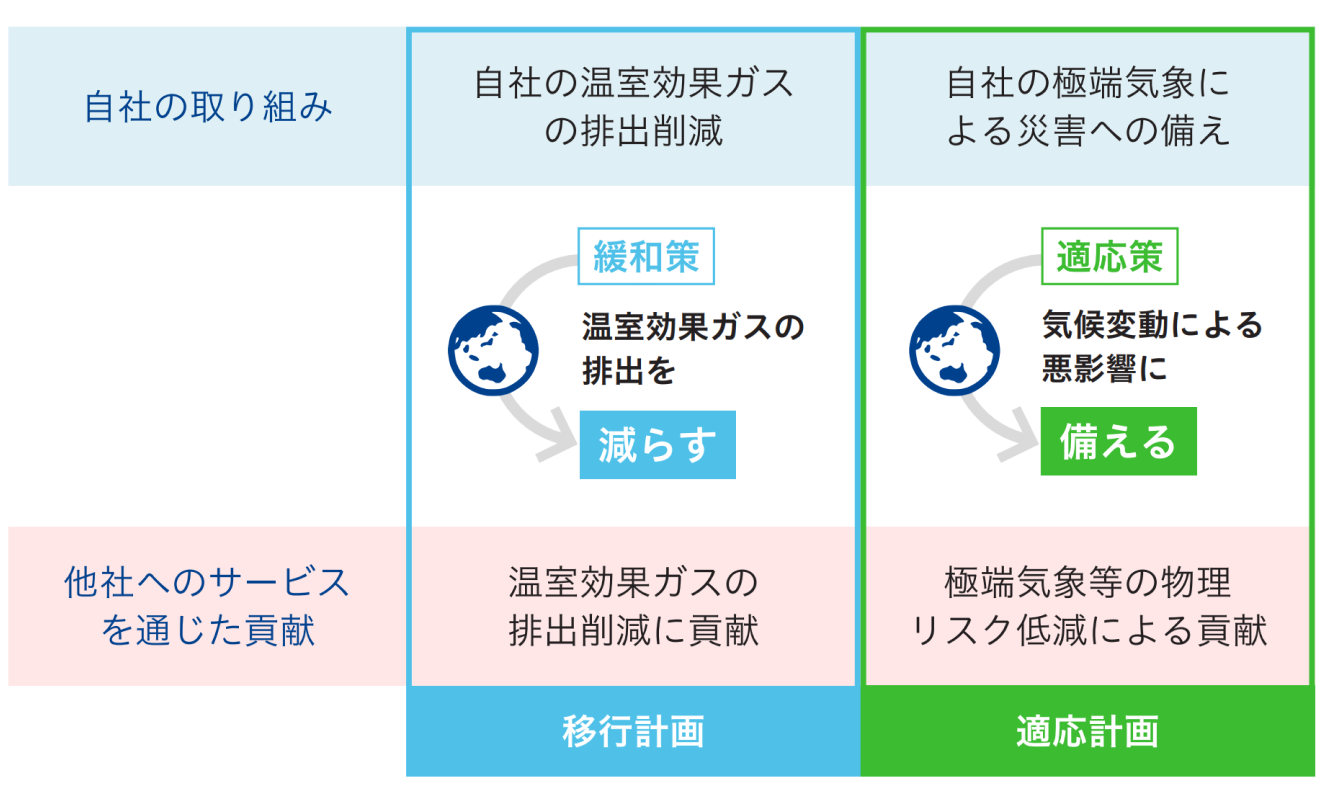
Our strategy for addressing climate-related risks and opportunities (Climate Strategy) consists of two key pillars: the Transition Plan and the Adaptation Plan. Aligned with the 1.5°C goal, the Transition Plan defines the targets and actions necessary to support the transition to a decarbonized society through climate change mitigation, such as GHG emissions reduction. The Adaptation Plan outlines how we aim to minimize the physical risks associated with climate change while capturing new opportunities.
Since our founding, driven by our original desire to help people in times of need, the Weathernews Group has provided services that contribute to climate change adaptation by mitigating risks from extreme weather for nearly half a century. In recent years, as part of the transition toward a decarbonized society, we have also strengthened our development of services that support climate change mitigation by reducing environmental impact. Through these business activities, we believe we can realize a more sustainable society by accelerating initiatives for both adaptation and mitigation alongside our stakeholders, and by executing both our Transition Plan and Adaptation Plan.
Key Initiatives
Contribution through Our Services
Turning Weather into a Strategic Advantage for Adaptation and Mitigation
In response to the intensifying effects of climate change, we provide solutions that turn weather into a strategic advantage. By leveraging our core expertise in weather forecasting and big data analysis, we enable companies to both maximize business profits and reduce their environmental impact. We contribute to the global environment by supporting the sustainable growth of businesses as they navigate weather and climate challenges.
Optimum Ship Routeing (OSR)
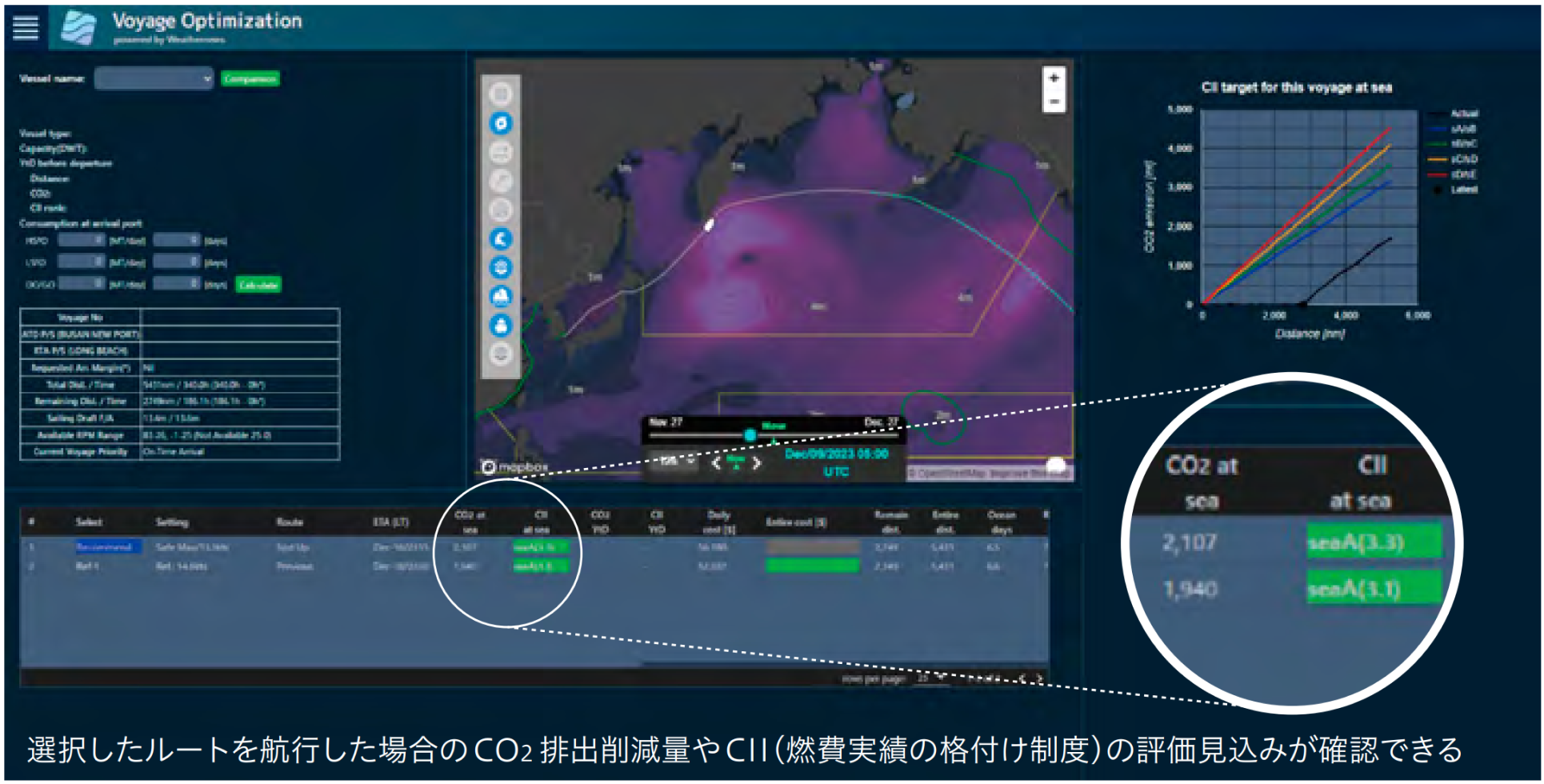
Our OSR service analyzes the fuel and speed performance characteristics of individual vessels to propose optimal routes and engine speeds by harnessing the wind and waves. We support vessel operations 24/7/365, providing safe passage with minimal transit times.
OSR does more than just mitigate heavy weather risks; it enables voyages that minimize CO2 emissions through fuel optimization and ensures on-time arrivals as required by transport contracts. As it meets the diverse global needs for Safety, Economy, Environment, and Punctuality, OSR adoption continues to grow worldwide. Use of this service contributed to a reduction of approximately 2.8 million tons of CO2 annually (actual results from June 2023 to May 2024).
Energy Grid Forecasting, Renewable Power Generation Forecasting
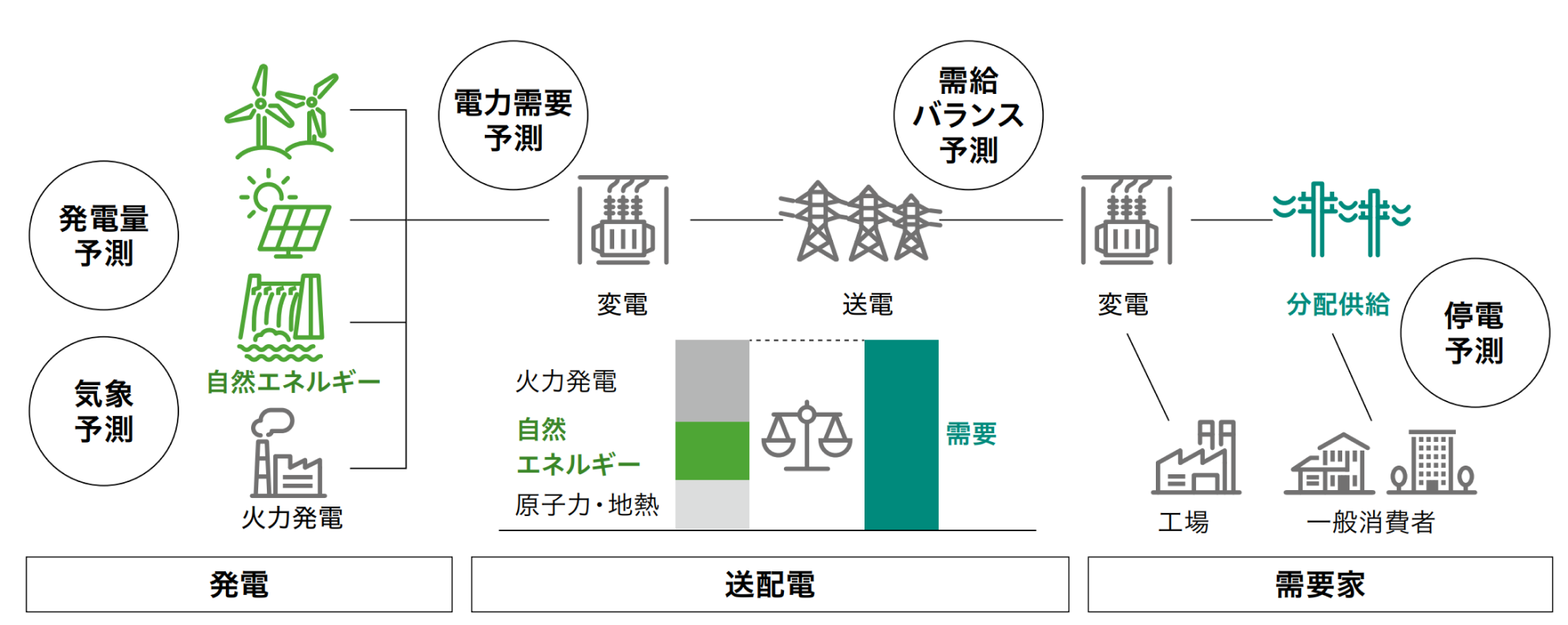
Weathernews provides comprehensive solutions for the stabilization and optimization of energy supply and demand.
By analyzing the correlation between temperature and human sensory data to forecast power demand, and utilizing solar radiation forecasts to predict solar power supply, we enhance energy efficiency and support the reduction of greenhouse gas emissions.
In the energy sector, we have developed a Power Demand Forecast Model using proprietary AI technology and offer a Supply and Demand Planning Support Service. Our highly accurate, region-specific forecasts are driven by weather data from approximately 27,000 locations and roughly 200,000 daily weather and sensory reports from our Supporters across the country. We support a stable energy supply for domestic and international electric utilities and gas companies, while assisting in efficient resource management, energy conservation, and cost optimization.
We also provide a Renewable Energy Generation Estimation Control Support Service. A primary challenge for renewable energy sources—such as solar, wind, and hydropower—is the inherent volatility of supply due to fluctuating weather conditions. By developing highly precise power generation forecasts, we support the optimization of overall energy management and power sales planning, thereby accelerating the widespread adoption of renewable energy.
Climate Tech Services
To address the diverse climate needs of our corporate partners, we launched our Climate Tech business in June 2022, providing the following specialized services:
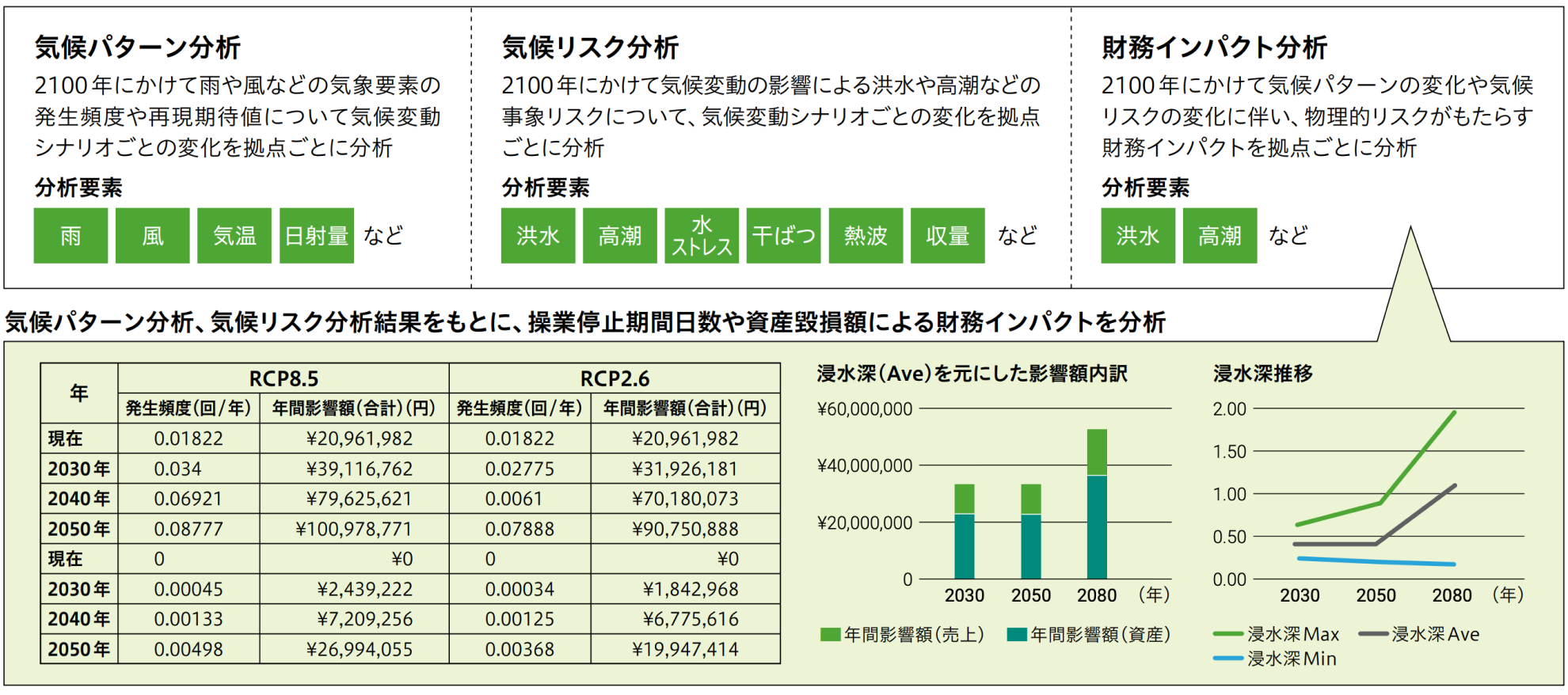
Climate Change Risk Analysis Service (Climate Impact)
This service provides a quantitative analysis of risks associated with the increasing intensity and frequency of natural disasters. By calculating the potential financial impact on production facilities and operational sites, we help companies integrate climate risk into their Business Continuity Planning (BCP) and Business Continuity Management (BCM). This data is also used to inform strategic capital expenditure decisions that account for long-term climate variables.
Climate Risk Monitoring Service
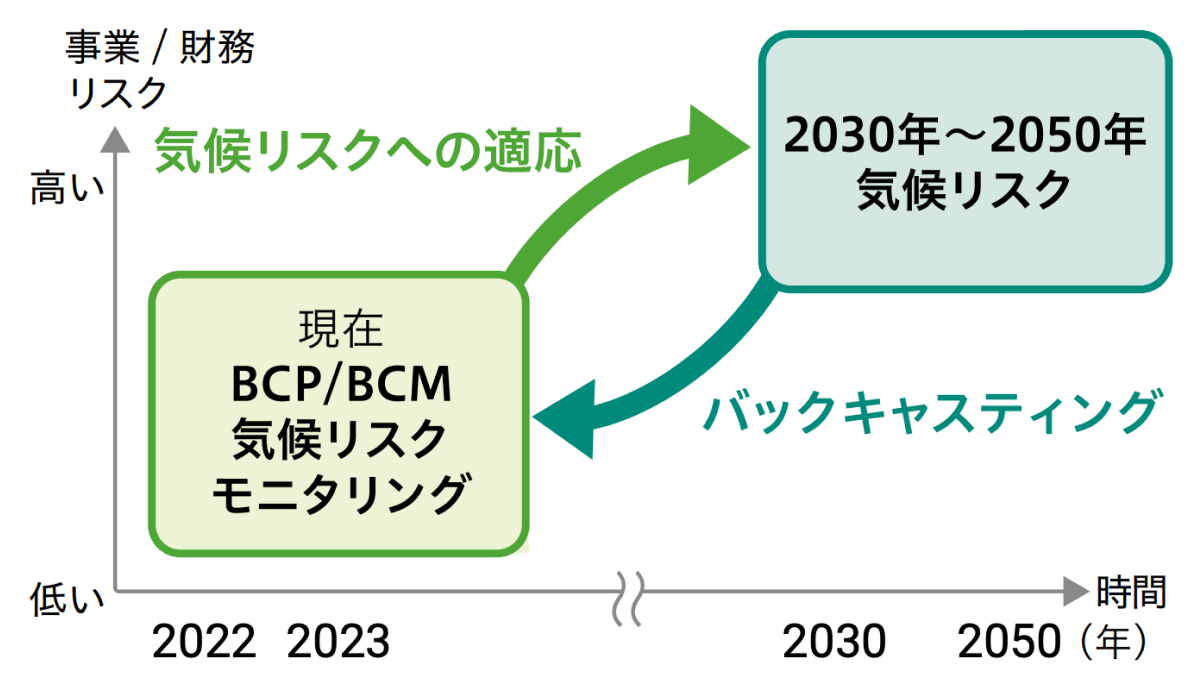
Designed to enhance corporate resilience and business continuity, this service provides tailored adaptation measures based on the specific climate risks facing each location. We leverage weather forecasts to support operations in mitigating or avoiding damage from storm surges, lightning strikes, and heatstroke—providing vital support for operational climate strategies. Our unique strength lies in a comprehensive two-pillar approach: we analyze climate risks decades into the future, then backcast from those scenarios to monitor and manage current, real-time risks.
Our Initiatives for Climate Change Adaptation and Mitigation
Reducing Physical Risks (Climate Change Adaptation)
Main Approaches
・Cloud Migration: Reducing physical risk by migrating on-premise servers to the cloud.
・Weather-Driven Risk Mitigation: Leveraging our own weather services to minimize physical risks.
Example: Developing initial response plans that include flood defense deployment (such as sandbagging), fuel procurement for backup power generators, and logistics management.
[4°C Scenario / 2050]
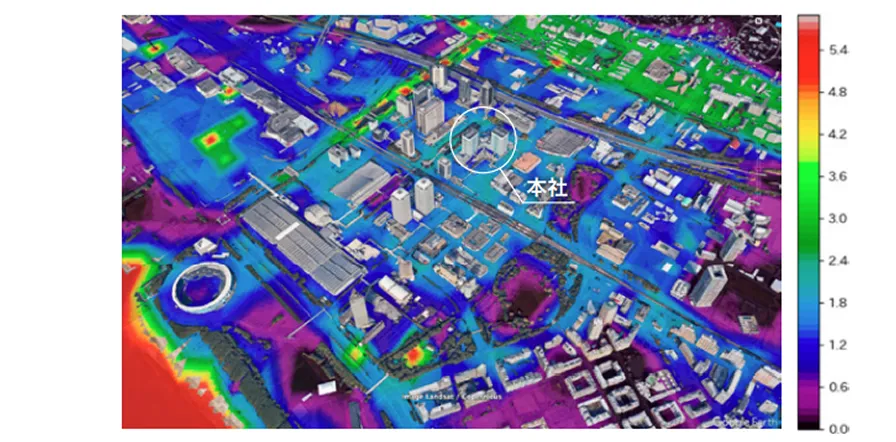
*Future analysis of storm surge risk using 100m mesh with Monte Carlo simulation
| Past Climate | RCP2.6 Scenario | RCP8.5 Scenario | |||
|---|---|---|---|---|---|
| Max Storm Surge (m) | 2000 | 2030 | 2050 | 2030 | 2050 |
| Return Period 200 Years | 0.00 | 0.01 | 0.03 | 0.07 | 0.28 |
| Return Period 500 Years | 0.26 | 0.36 | 0.38 | 0.43 | 0.65 |
| Return Period 1000 Years | 0.39 | 0.50 | 0.52 | 0.56 | 0.79 |
We have evaluated the current and future (2030 and 2050) risk of inundation from floods and storm surges at our key operational sites. At the Global Center—our primary hub for headquarters, operations, and development—we have identified potential storm surge risks. In the event of flooding, we anticipate possible damage to external HVAC (air conditioning) equipment and a localized reduction in operational capacity.
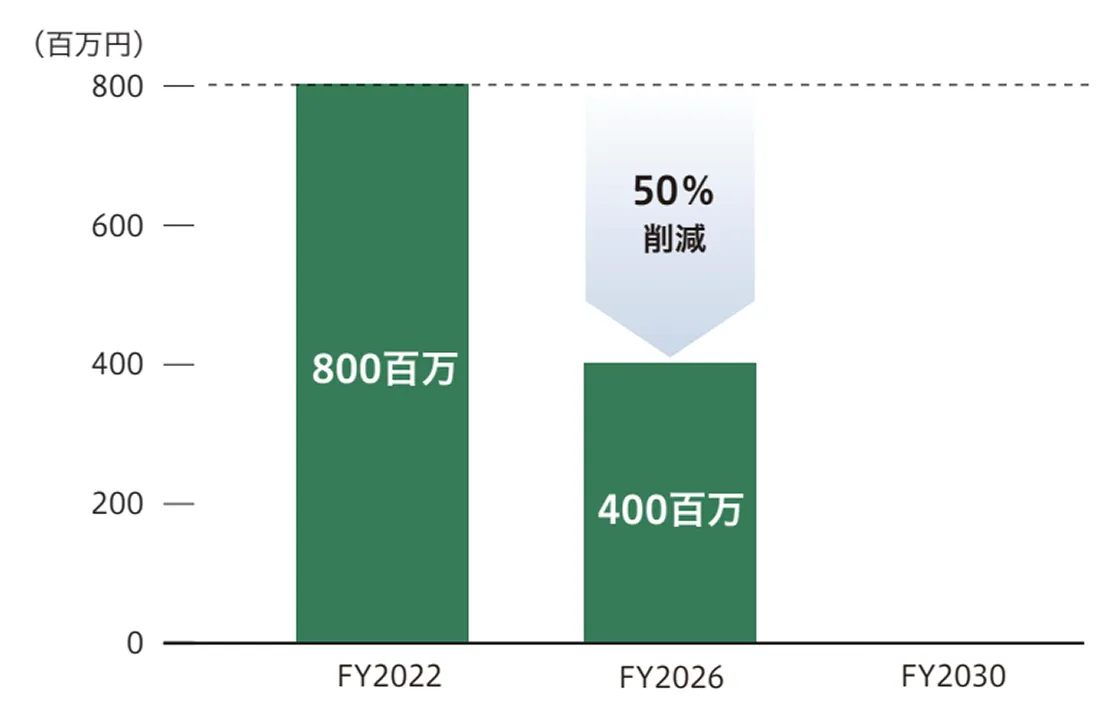
The Group has set a goal to reduce the operational impact of these physical risks by 50% (relative to FY2022 levels) by the end of FY2026.
Reduction of GHG Emissions (Mitigation of Climate Change)
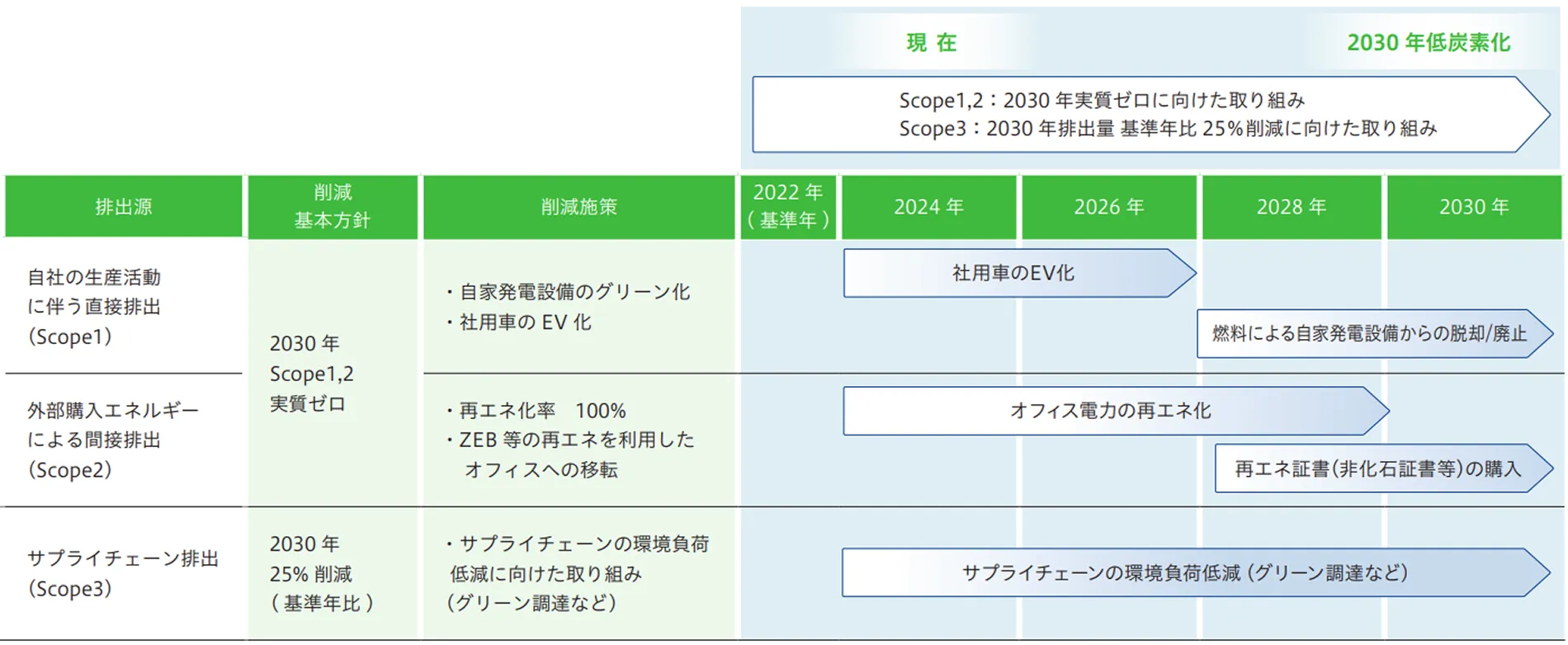
The Group aims to achieve net-zero Scope 1 and 2 emissions across our entire consolidated operations by 2030, alongside a 25% reduction in Scope 3 emissions by 2030 compared to 2022 levels. Moving forward, we will continue to reduce GHG emissions throughout our business activities. By viewing the transition to a decarbonized society as a strategic business opportunity, we strive to achieve both corporate growth and a reduced environmental impact.
TCFD Disclosures
In June 2022, we announced our support for the recommendations of the Task Force on Climate-related Financial Disclosures(TCFD). Our climate disclosures follow the TCFD framework, focusing on the Governance, Strategy, Risk Management, and Metrics and Targets associated with the risks and opportunities facing our business. Through these efforts, we will work toward a sustainable society in collaboration with our shareholders, investors, and a wide range of other stakeholders.
Learn MoreGHG emissions results
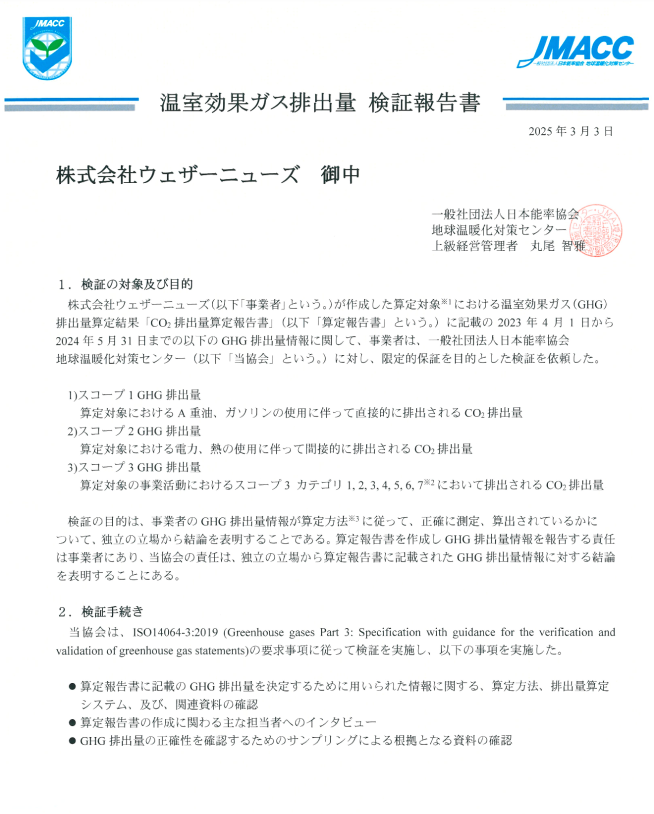
The Group discloses Scope 1, 2, and 3 emission results annually. In addition, the results are subject to third-party verification by an external verification body.
| Category (*1) | CO2 Emissions (Unit: tCO2) | ||||||
|---|---|---|---|---|---|---|---|
| FY ended May 2023 (*3) | FY ended May 2024 (*3) | FY ended May 2025 (*3) | FY ended May 2026 | ||||
| Scope1 | Emergency private power generation | 7 | 7 | 0 | 1 | ||
| Company cars | 23 | 23 | 19 | 14 | |||
| Commercial air conditioners | 4 | 0 | 13 | 0 | |||
| Scope2 | Office | Domestic | Headquarters | 2,570 | 298 | 281 | 295 |
| Others | 27 | 30 | 11 | 5 | |||
| Overseas | 44 | 65 | 53 | 43 | |||
| Weather observation instruments (*2) | 7 | 8 | 7 | 5 | |||
| Scope3 | Category 1 | Purchased goods and services | 10,945 | 11,612 | 11,573 | 10,371 | |
| Category 2 | Capital goods | 381 | 351 | 220 | 127 | ||
| Category 3 | Fuel and energy related activities not included in Scope 1 or 2 | 704 | 371 | 362 | 354 | ||
| Category 4 | Upstream transportation and distribution | 122 | 130 | 158 | 139 | ||
| Category 5 | Waste generated in operations | 16 | 33 | 28 | 25 | ||
| Category 6 | Business travel | 937 | 1,160 | 1,151 | 1,338 | ||
| Category 7 | Employee commuting | 123 | 132 | 142 | 139 | ||
| Category 8 | Upstream leased assets | - | - | - | - | ||
| Category 9 | Downstream transportation and distribution | 0 | 2 | 1 | 0 | ||
| Category 10 | Processing of sold products | - | - | - | - | ||
| Category 11 | Use of sold products | 928 | 1,005 | 657 | 398 | ||
| Category 12 | End-of-life treatment of sold products | 4 | 2 | 2 | 1 | ||
| Category 13 | Downstream leased assets | 0 | 0 | 1 | 2 | ||
| Category 14 | Franchises | - | - | - | - | ||
| Category 15 | Investments | 105 | 95 | 74 | 64 | ||
| Total | 16,948 | 15,324 | 14,752 | 13,323 | |||
*1: Scope 1: Direct GHG emissions by the company itself (fuel combustion)
Scope 2: Indirect emissions associated with the use of electricity, etc. supplied by other companies
Scope 3: Indirect emissions other than Scope 1 and 2 (emissions of other companies related to business activities)
*2: Disclosed because they are installed and operated by us domestically and overseas outside of offices.
*3: About Third-party Assurance
To improve the reliability of our CO2 emissions results, we received third-party assurance from the Japan Management Association for direct CO2 emissions (Scope 1), energy-origin indirect CO2 emissions (Scope 2), and other indirect CO2 emissions (Scope 3).
Participation in Industry Organizations and Initiatives
TCFD
In June 2022, we announced our support for the recommendations of the Task Force on Climate-related Financial Disclosures (TCFD).
CDP
We were certified as an 'A List' company, the highest rating in the climate change category, by CDP, an international non-governmental organization working on environmental issues such as climate change.
Certified as CDP 2025 Climate Change "A List", the highest rating (2025)
SBTi
We have established group-wide greenhouse gas emission reduction targets that are scientifically aligned with the goals of the Paris Agreement. These have been officially validated by the Science Based Targets initiative (SBTi) as "Science Based Targets."
GHG Emission Reduction Targets for 2030 Obtain SBTi Validation